“COVID-19 in Montana: Q&A with physician - KRTV Great Falls News” plus 1 more
“COVID-19 in Montana: Q&A with physician - KRTV Great Falls News” plus 1 more |
| COVID-19 in Montana: Q&A with physician - KRTV Great Falls News Posted: 08 Apr 2020 12:00 AM PDT 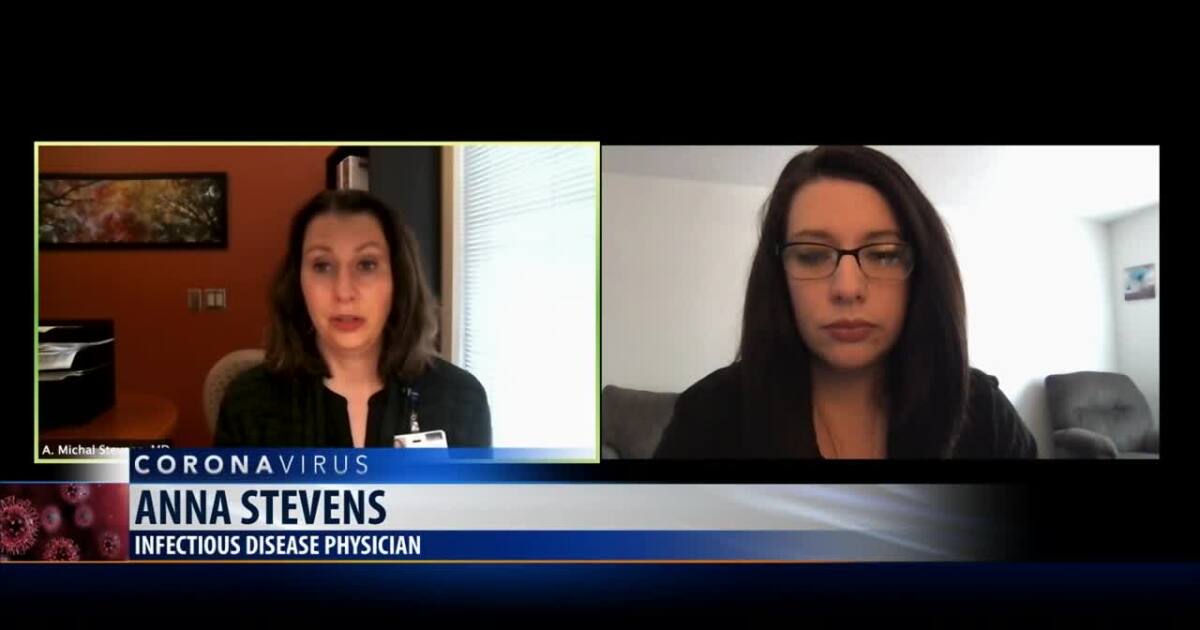 GREAT FALLS — As of Wednesday at 10 a.m. (April 8), there have been a total of 332 confirmed cases of COVID-19 (coronavirus) in Montana, and six deaths (source/map). There have been three deaths in Toole County, and one each in Lincoln County, Madison County, and Missoula County. There have now been 31 hospitalizations of COVID-19 patients in Montana, and 135 recovered patients. The DPHHS public health lab in Helena has completed 7,398 tests for COVID-19. Click here for details on the daily update. Anne Stevens is an infectious disease physician at Benefis Health System in Great Falls and participated in a question-and-answer video chat with MTN News reporter Jennifer Walter, who solicited questions from the Great Falls community: Walter: Can we just talk a little bit about what symptoms people are seeing? And kind of anything anybody should be looking out for? Stevens: Coronavirus honestly looks very similar to just about any other common head cold virus, any other respiratory virus. A lot of people do have fevers from that, and headache is also fairly common too. But then we have the other end of the spectrum where some people have no symptoms at all. So, it's quite varied and it also varies by people's immune system status and also by their age as well. So, it can look very similar to a lot of other things we experience multiple times during the course of a winter. Walter: That was one that had been brought up, is bloody nose a symptom? And I was curious about that with your sinuses, are they affected by it? And so, would that be a symptom that would come about? Stevens: In a normal person that's not on blood thinners and does not have any vascular disorders in their face, then a normal person should not have any significant bloody nose. But somebody that is on blood thinners, or if they had nasal irritation or sinus problems then they could end up with a bloody nose from this. Walter: Thank makes sense, and as far as a dry cough, especially one that doesn't seem to be going away? That was one of the questions we had. Stevens: So yes, dry cough is definitely one of the other common features that we are seeing. Dry cough is actually very common especially if it is prolonged like with a number of other coronaviruses. So, we have 4 coronaviruses that we test for regularly that are not COVID, but they're all viral illnesses that have a very prolonged cough. Those average to be about 10 days usually with the clinical illnesses. Walter: And that leads me to one of the other questions I saw in here, this one I will go into the details a little bit. This person did wish to remain anonymous, but they said that they believe they might have had the COVID-19 in early March before cases were being reported in Montana. They had a slight fever, trouble breathing, and it was forcing them to cough quite a bit. They said they had an occasional headache and always felt tired, but they were advised just to stay home so they didn't go to get checked. It says that nearly a month later they're feeling better, but the main question was should they go get tested now? Even though they may not be experiencing those same symptoms anymore. Stevens: So, I would say there is not much utility to getting the viral PCR testing to see if they have an active infection. Most people that get infections, with COVID, they might have viral particles coming out of their body for several weeks. But I think the more useful test, which is just coming on to the market, is an antibody test to see if they had an infection in the past. And so, at some point when that becomes more available, they might consider getting an antibody test seeing if they had it and if they might be immune to it at least for now. Testing: Walter: Can you tell me a little bit more about the antibody test and if there is a timeline of when they expect that to be more readily available to people? Stevens: There are a few out there, some of them are not thoroughly vetted with the FDA. And so, there's still a lot of limitations and a lot of hesitancy from a number of healthcare agencies to recommend doing that. But there is a lot of active study and so, I think in the next few months we're going to see more of those. There's a few on the market and a few that are direct consumer marketed as well but I think we are going to be seeing more of those and they do have a fairly useful role for detecting who in the community is immune to coronavirus. Walter: Very cool. As far as looking at testing, there was a few questions we have received about if someone should be tested. And so, I know that we have kind of covered this before but I wanted to see if you could give us an overview, especially at Benefis of why you test, what the criteria is, and if someone has any concerns, what they should do. Stevens: Sure, and Benefis is following the CDC recommendations for doing testing. We kind of divide the testing into several different groups. The high-risk people, the people that are sick and having to be admitted into the hospital, people in nursing homes, or healthcare workers. Those are all very high priority people to test because the implications for infection prevention and also spreading to other people, say, in a nursing home. Those ones are highly prioritized. We have run about 450 tests here at Benefis in the last month for the most part as the testing has become available. And we do also have in house testing which we are using mainly for the high priority patients that are in our hospital, under our care. As far as the people that come into our respiratory clinic wanting to be screened for COVID, we basically test anybody with the symptoms at this point. We have more testing availability and so we are definitely testing anybody that comes in complaining of fever or cough or respiratory symptoms. I think it's better especially in a large public health situation to over test than to under test honestly. Now there are concerns about a-symptomatic transmission, with this coronavirus and those are not people that we typically test unless there's some particular high-risk situation for them spreading it to susceptible people. So those are lower priority testing for us. Walter: Okay. And that was one of the direct questions we had. This person wished to remain anonymous but they did ask that they had heard a rumor that Benefis isn't testing people in Great Falls, which obviously is not true so thank you for confirming that, and for going over that criteria again. As far as being able to do more testing do, we have a better capability now than we did in the past? Is there more tests available? Stevens: Certainly, we do, and a lot of our tests that are lower priority, will be sent off to the state But we also now are one of two hospitals in Montana that have a test that we can run in our own microbiology lab and the turnaround/result time for the test is only a couple of hours. So, we are using that but supplies are also limited from the manufacturer of the tests so we are trying to be judicious in who we test. But that is our method right now is any patient that is inpatient here gets the rapid test. Walter: As far as the amount of cases in cascade county, considering that they haven't really changed for a few days and knowing now that you guys are doing all of these tests is kind of a compliment to the community of people that are actually following social distancing guidelines. Distancing: I know that there was quite a few questions about social distancing and there was one in particular that I'm not sure if you would be able to answer but I am curious on the answer. Someone said, if they have kids who go from one household to another is that something where they should be staying at one household instead of going back and forth like between different parents? Stevens: So, I think the best answer will be different for different families. I would say limit your social contacts to as few as your family can handle reasonably. For some people it's just not feasible because of work and daycare and other concerns for the family. But some families I know have different dynamics and the family wouldn't be able to function without some of those other social contacts. So, I think every family needs to just be really careful and think about their situation and think about how to minimize their contact with other people as best they can. Masks: Walter: A couple of the questions we had to do with homemade masks and how different masks that people have at home. They're wondering if there's a way to sterilize them. And I am not 100% on what the type of masks are that each question was talking about, but this one said that they had home-made cotton face masks and they were wondering if a microwave would be a proper way to sterilize them? Stevens: So, I think first and foremost trying to sterilize a mask in an oven or a microwave, that is a fire hazard. I do not recommend doing that at all. Just laundering your mask in the regular laundry should be perfectly adequate. Walter: Okay, and as far as one of the other questions was talking about more of like a paper mask that they had and so, I'm not really sure if there is a way to sterilize that if it's just something that they're using with paper, or I am not sure what exact material that they're using for it, but is there any other way that they might be able to sterilize those? Stevens: I know those masks are meant to be single use only so, they're not meant to be sterilized. So, I don't think there is any valid way to do that. Part of the equation is also where are they going with this mask on. Because some people are wearing masks even when they're at home and they're not around other people. Some people are wearing them while driving their cars by themselves. If you're not out and around other people, then that mask is probably not going to be contaminated honestly. Active cases: Walter: I do want to address this, and you can comment on it if you feel necessary, but there was a couple of people who asked how many of the Cascade County cases were in Great Falls? And KRTV has spoken to the City County Health Department and that's just information that they're not releasing because of the patient's right to privacy. So I just wanted to address that to make sure that, that is just information that we don't have, that the county is not going to give out just because we want to make sure that the people who are affected by this are able to stay safe. Stevens: Absolutely, and I don't have that data either, like where the people's home addresses actually are. I do know a number of people are in Great Falls, but most of the population in Cascade county is in Great Falls. So, it doesn't really help us much to pin that down, but I do know that there are cases here in Great Falls. Walter: A couple of questions were in regard to animals. So, if different animals that have contact with people in Montana might be able to spread the virus? A couple of those mentioned were cats, horses, dogs. I am not sure if you are able to answer that at all, but we did recently see a case that was in New York where a tiger had been confirmed. So, I think that's kind of where that question came up and why people are wondering what is going on with that. Stevens: Yes, and I think that's very interesting that the Tiger in the Bronx I believe it was, actually became clinically sick and they thought that it had been a Zoo worker that was a-symptomatic or pre-symptomatic that then infected the Tiger. So, we do know that at least Tigers can get coronavirus. That's the only information I have seen about animals becoming infected with coronavirus. Now the other side of the issue is that coronavirus can get on animals. On their fur, and you know, you pet your dog and it can be on the animal's fur and that can be transmitted to other areas of where that animal has been, potentially to other people. So, I think that concern of having it be what we call fomite transmission where it's a contact surface type of transmission, I think that is a concern that's fairly legitimate. So, if nothing else we want to make sure we take good care of our animals too. Walter: And I know especially in Montana it's hard to start thinking about mosquitos but there was a couple of questions related to mosquitos. One, would mosquitos be a carrier or the virus from one person to another. And I am not really sure if there's any data out there to really say one way or the other? But do you have any comments on that? Stevens: So, coronavirus has mainly just been in our winter months. So far, this virus came on the scene in mid-December and so, it's largely been, as far as the developed countries, it's largely been in mosquito free times of the year essentially. So, I don't think we have great data to say one way or another. We know that the virus can be in peoples blood stream and of course if a mosquito takes a blood meal then it can have the virus in it *theoretically. This hasn't been scientifically proven. But then for a mosquito to transmit a disease from one person to another person, it has to have the virus replicating actively and be basically a hearty virus that stays in that mosquito long enough and in enough amounts to infect the next person. So bottom line is we don't have enough data on that, but we do have other arboviruses, Arthropod-borne viruses, things like dengue fever or Chikungunya or Zika virus where those are concerns and they definitely are a major factor on the global scene of infectious disease. But as far as COVID itself, I don't think we have any data to support that, at least not at this point. Walter: And there was a question that if someone had a malaria vaccine if that might offer them a lower chance of getting sicker from the COVID-19. Stevens: I was a little thrown off by that question because there is no malaria vaccine unless you have been participating in a clinical trial. So, I don't know if they were thinking about a different vaccine or what, but we basically won't have any way to answer that question. Treatment: Walter: Paul states there is conflicting advice with regards to addressing a fever in potential COVID patients. If a fever is the body's method of dealing with a virus should we allow the fever to run its course, or treat it with acetaminophen, which also begs the question are over the counter pain relievers harmful in the current scenario. Stevens: I think the basic answer to that is if you have a fever that gets too high it can be dangerous to a person. So, in adults if it is over 102 or 103 then we say take a fever reducer. Little children can actually tolerate fevers a lot better than adults, so we say if it's getting over 104, 105 then you definitely want to bring that fever down. The other aspect of that is patient comfort. If somebody is absolutely miserable dealing with their fever, then I would just say go ahead and treat it with fever reducer. But I do agree the fever is a natural response to infections. It's not always a great affective method for letting a fever try and control the virus but more just a representation of the virus and that your body's immune system is ramping up and trying to address the infection. So those are my thoughts. I think that taking fever reducers if your fever is too high or if you're just miserable I think that's all very fair to do. And there's not evidence at this point at least that ibuprofen causes a problem. I know the WHO had initially recommended avoiding ibuprofen, but they've actually taken back that recommendation and there's no concrete scientific evidence saying at this point that ibuprofen is problematic in a COVID patient. Walter: One of the next questions that he had on there was is there a specific or best course of treatment for the varying severity of the infection? Stevens: So we are following the literature on this extremely closely. Both I and my pharmacy colleagues are keeping a close eye on various websites that discuss this often at a national level. And I know Hydroxychloroquine is kind of the main treatment that's out there right now. It was based on a study that is out of Marseille and its very small numbers of patients but the quality of that data and the recommendation and the findings from that study is not great honestly, but we've only had this virus around for 4 months now and so there's always changing literature, there's changing thoughts on how to about treating it best. But for what we have right now, the hydroxychloroquine is something that is being considered a treatment although I think we will have much better treatments and it also is possible that it may be found to not have great efficacy in subsequent studies. It's what we're using right now for lack of having anything better basically. Benefis employees: Walter: Alright and then the last question here from Paul stating, "Does Benefis have a plan in place or contingency program to help their employees and families, anyone who might be impacted while providing healthcare services to the community?" Stevens: Oh yes, we have a number of new initiatives around Benefis. We have opened childcare for our employees only, but given the lack of available childcare in other places in our community we now are providing our own childcare. We also have a no lay off policy for our employees, so we know that their jobs are safe as well. And some of the people whose care areas have shrunk down due to low patient volumes they are being shifted to other areas where they can be more useful at least on a temporary basis. We have also posted a few additional jobs to help the community out so we have a number of really good things going and we're actively listening for feedback form our employees on how else we can help them. Walter: I have a follow up question and I am not sure if it's what Paul was looking for but just for my own curiosity, if there's any workers that are exposed to the COVID 19 and end up getting sick, does Benefis have a plan for those employees as well? Stevens: We do we have a number of staffing plans depending on basically how many staff are potentially out for a little while. Like let's say if they were testing positive and have to be in isolation or if they were exposed and need to be quarantined then we have a number of staffing plans depending on how many people are out and what areas we have to shift people over from. So, we actually have done an extensive amount of planning for that. Staying safe at home: Walter: I have another question here that was from Sue and she says that, "We are in our sixties and help care for our grandchildren who have a parent that is a Respiratory Therapist. Are there any other precautions we should take besides hand washing and disinfecting touchable objects in the house? Stevens: So, in addition to the handwashing and surface decontamination I would say just be really vigilant about covering your cough, no touching your face. And its not like your forehead or your cheeks it's your eyes and nose and mouth. That's where the virus is going to get into your body potentially. So be extremely careful from that and if a household member does become sick then try to isolate them as best as you can so it doesn't spread to other household members. And also, the respiratory therapist I am sure they've been made aware of what they can do to clean their hands on their way home or multiple times before they come into the house. Me personally I keep a pump bottle of hand sanitizer in my car and I use it a lot because I am mindful of not wanting to bring this home to the other people I live with too. Disposable gloves: Walter: Lisa wanted to know, she says she's been wearing disposable gloves to the grocery store and was "approached by a medical person saying I should not wear those-the virus attached itself to disposable glove. I dispose of the gloves after shopping in the correct manor and when I get home washing my hands immediately. Is this not added protection for me?" Stevens: SO there is information from a number of healthcare agencies including the CDC demonstrating that virus' actually sticks to gloves more aggressively than to human skin. And so if she did get coronavirus on her gloves there would be risk of her spreading it to other items that she touches around the supermarket or if she touched her face with the gloves on or touched her car when she was getting into it, things like that. There is increased with that. I would say the better modality is honestly just to carry hand sanitizer with you and keep it in your car and just use it as often as you can. Walter: Another question here was from Wade, who wanted to know, "Is the COVID-19 lock-down having any effect on the numbers of colds and flu reported? "I was also curious of that because I know elsewhere there was a case of Whooping cough that the numbers actually were lower than what they would have been because there was less contact with other kids in the community. Stevens: Yes, so we are actually having a lot less flu this year than we normally would expect honestly. So, we're still seeing a fair number of other viruses but less than usual. I think the social isolation and social distancing is actually impacting a lot of different illnesses that are transmissible from person to person. Walter: That's good! Alright and this is the last question that I have here this one is from Andre, "For people who have asthma use a nebulizer or an inhaler to help with breathing issues would these be an effective treatment in early treatment for COVID? " Stevens: Albuterol won't help treat the actual virus itself it will help treat the symptoms, especially like bronchospasms or asthma symptoms that are worsening. So, we do see that being used a lot for the patients that come in with COVID and a cough and other respiratory symptoms. So, it is something that we are using but again it won't treat the virus itself it will treat only the symptoms. Walter: Alright well I think we went through all of the questions that we had received. So first I just want to tell everybody thank you for sending your questions in first off and thank you very much to you Dr. Stevens for taking the time to sit and chat with me about all of these. Was there anything else you wanted to talk about or make sure people know about? Stevens: I think my only final caution is just be aware of a lot of misinformation online. There's a lot of strange and not well-founded ideas that are circulating about, and I just want to encourage people to be really careful with where their health information is coming from. Using well vetted websites, including the CDC website and other public health department websites, just make sure you go to a source that is reliable. Walter: Absolutely, I agree and that's why we wanted to do this is to get it from the source so thank you. CONTINUING COVERAGE: |
| Posted: 24 Apr 2020 06:20 AM PDT  St. Joseph Hospital Eureka [Image from the hospital's website] The potential for an effective treatment against the new coronavirus is an exciting development for people who are suffering from moderate to severe negative effects of the illness, particularly those people experiencing shortness of breath. Remdesivir, if proven effective, will essentially block the virus from replicating itself in the body- this would be a real game-changer for people who are already suffering from the virus- but it is not a preventative treatment, like a vaccine would be. The highly contagious virus causes damage to the lungs for the most severely affected patients. COVID-19 has become widely known for its ability to weaken respiratory systems of its victims, in many severe cases causing death, even after a patient has been intubated and given a ventilator to control their breathing mechanically. As the numbers of infected people increase daily, the current number of deaths in the State of California since the outset of the COVID-19 epidemic now stands at over 1500 fatalities. In Humboldt County, we have not had any deaths yet attributed to COVID-19, but public health officials are wary that this could change, regardless of the local positive testing results seeming to level off. Across the nation, the controlled study requires a combined total of 7,600 individuals to be enrolled between the two groups of moderate and severe cases. The goal is to see a diverse range of applicants included, with 179 hospitals participating in the trials, including St. Joes Hospital in Eureka. The possibility of seeing improvement in two of the most problematic symptoms of the COVID-19 disease, the restricted breathing of infected patients as well as a reduction in fever, has brought a silver lining to those who are already, or may be hospitalized in the future. The announcement of the trial was made locally on April 7, in a press release which explained that Roberta Luskin-Hawk, MD, Chief Executive for St. Joseph Health, was "an infectious disease physician with extensive clinical research experience including working with National Institute of Allergy and Infectious Diseases Director Dr. Anthony Fauci during the AIDS epidemic. " The announcement also stated,
In order to get direct insight on this new development, we asked Roberta Luskin-Hawk, MD, Chief Executive for St. Joseph Health, Humboldt County for some feedback. She told us that the "studies should complete enrollment by the end of April or May. Patients need to be followed for 28 days after initiation of therapy. Data analysis will then take place. Gilead may be able to predict the timing of preliminary results." She noted that St. Joe's is currently interested in receiving potential COVID positive applicants locally. This scientific exploration is being spearheaded by the California-based biotechnology company Gilead Sciences, which has offered the drug remdesivir (RDV) for the experimental trials. Dr. Luskin-Hawk explained that, "The study will look at the rapidity and extent of clinical improvement (improved oxygenation and time to clinical improvement) and look for a benefit on survival." ABOUT THE REMDESIVIR CLINICAL TRIALS: There are criteria for who can be included in the Phase 3 human trials, both for those addressing moderate as well as severe symptoms. Some of those criteria for the program include: the ability to give written consent for participation, a confirmed positive infection of COVID-19, being 12 years or older, having either moderate or severe COVID-19 symptoms, being currently hospitalized with the disease, and not being on a ventilator at the time of screening for the program, among other requirements. According to the Gilead Sciences website, the study is approved by the Federal Drug Administration, while general use of the drug has not been, but may be fast-tracked following the analysis of the clinical trials. The company released a statement on their website which explains the new trials in basic terms, which reads in part as follows:
Of the Phase 3 clinical trials,, there are two patient study groups. One is for the severe cases, and another for the more moderate cases. The clinical trials for patients with severe cases has increased capacity from 2400 patients, to now recruiting 6000 to be enrolled in Study #1 (GS-US-540-5773). An additional 1600, up from the initially anticipated total of 600 patients, are being recruited for Study #2 (GS-US-540-5774), with symptoms considered to be moderate. The study details and parameters were updated as recently as April 22 at the webpage which tracks changes of each study, noted by the U.S. National Library of Medicine Clinical Trials webpage. The total of 7600 recruited patients will be overseen by as many as 179 different hospital locations, according to Gilead. REMDESIVIR in HUMBOLDT COUNTY: Potentially, COVID cases from Southern Humboldt would be referred to St. Joes if they wanted to be recruited for the experimental drug trials. St. Joseph Hospital CEO Dr. Roberta Luskin-Hawk said in an email reply to our inquiry, "No out of area patients have been incorporated to date. Patients with Severe COVID-19 in Southern Humboldt would be referred to St. Joseph for critical care and would be a candidate for the trial." According to Dr. Luskin-Hawk, the use of remdesivir as an effective treatment is promising. Dr. Luskin-Hawk did not rule out the possibility of receiving registered participants from out of the area, but noted that there were none at the time of her reply. In regard to the number of patients enrolled locally, Dr. Luskin-Hawk told us, "We couldn't predict how many cases we'd have at the time I expressed interest, however, there is value in diversity in clinical trial participants. The intent is to enroll patients hospitalized locally." Dr. Roberta Luskin-Hawk noted that this development is good for Humboldt County, and not just for the larger picture of a world-wide medical crisis that as of yet, has seen no effective mitigating treatment other than mechanical breathing assistance such as the use of a ventilator or a supplemental oxygen. PREMATURE CELEBRATION AND SPECULATION ON SMALL CASE STUDIES: The Phase 3 medical trials are expected to be "recruiting" for a few more weeks, and then after the dosage schedule has been completed for the last participants, the detailed analysis by medical scientists and affiliated experts begins, and the end results regarding the effectiveness and potentially negative outcomes as well, will be available in a few months. Already, there have been promising case study outcomes reported, spurring debate as to premature conclusions of effectiveness, and even causing stocks to jump in reaction to the early speculation on the drug's effectiveness. The first COVID-19 patient diagnosed in the US was a young man in Washington state who was given the drug as his condition went from moderate to severe, and he improved the next day, according to a case report in the New England Journal of Medicine (NEJM).  Chest X-Ray of the first US Covid patient, from Washington State – Posteroanterior and Lateral Chest Radiographs, January 19, 2020 (Illness Day 4). No thoracic abnormalities were noted.  Chest X-Ray of the first US Covid patient, from Washington State – January 26, 2020 (Illness Day 10, Hospital Day 6). Stable streaky opacities in the lung bases were visible, indicating likely atypical pneumonia; the opacities have steadily increased in density over time. In this case (X-ray photos above), the New England Journal of Medicine [NEJM] noted that, "Treatment with intravenous remdesivir [sic] was initiated on the evening of day 7, and no adverse events were observed in association with the infusion." They further noted his marked improvement, stating, "On hospital day 8 (illness day 12), the patient's clinical condition improved. Supplemental oxygen was discontinued, and his oxygen saturation values improved to 94 to 96% while he was breathing ambient air. The previous bilateral lower-lobe rales were no longer present. His appetite improved, and he was asymptomatic aside from intermittent dry cough and rhinorrhea." Although he was not released from the hospital immediately, there was a noticeable positive reaction to the drug. Also printed in the NEJM was a report from April 10th, which found improvement in a small group of patients, and promoted a responsive statement from the biotechnology company's CEO. The conclusion of the the NEJM April 10th report found, "In this cohort of patients hospitalized for severe Covid-19 who were treated with compassionate-use remdesivir, clinical improvement was observed in 36 of 53 patients (68%). Measurement of efficacy will require ongoing randomized, placebo-controlled trials of remdesivir therapy. (Funded by Gilead Sciences.)" Addressing some of the premature celebration, biotech company Gilead Sciences released an open letter from Chairman & CEO Daniel O'Day on April 10th. The letter calls attention to the scientific scrutiny needed to draw any concrete determinations from an epidemiological standpoint, specifically in regard to an article in the New England Journal of Medicine published on the same day, which highlighted a small batch of patients who were involved in a "compassionate-use" application of remdesivir, which do not involve the same protocols as clinical studies. In order to clarify the expectations and results of the NEJM article, the Gilead CEO, Daneil O'Day, put out a statement in an effort to bring some context to the conversation. The letter reads in part,
There have been stock surges related to the developing data, fueled by speculation regarding improvements in some patients, but meanwhile, the study is nowhere near completed. Although there is hopeful anecdotal evidence, not just abroad, but here in the US, scientists within the company, and the Gilead CEO himself, have urged patience before exclaiming victory over the worst symptoms of COVID-19.  Clinical improvement is shown in the full cohort, in the cohort stratified according to ventilation status at baseline, and in the cohort stratified by age. (NEJM April 10, 2020.) The letter went on to explain why these early projections of the effectiveness are ill-advised, stating,
Regarding the final outcome of the invaluable data, the Gilead CEO again cautioned against drawing hasty conclusions, even though there are very hopeful signs of improvement in some patients. O'Day continued,
Following up on information garnered from a leaked video regarding the results of a small clinical trial in Chicago, Time Magazine reported that a study including 125 people with COVID-19, that each were treated with the experimental remdesivir, and of them, 113 had severe disease, and many of them experienced relief after being treated. According to Time, Kathleen Mullane, a professor of medicine at the University of Chicago who is overseeing the trial, said in the video discussion that most of the patients taking the drug had improved enough to be discharged from the hospital, and only two died. In response, a statement released by a university spokesperson said "Partial data from an ongoing clinical trial is by definition incomplete and should never be used to draw conclusions about the safety or efficacy of a potential treatment that is under investigation. In this case, information from an internal forum for research colleagues concerning work in progress was released without authorization. Drawing any conclusions at this point is premature and scientifically unsound." The timeline for the entire clinical study to be completed is noted in the trial details at the U.S. National Library of Medicine Clinical Trials webpage for the study, indicating the "Estimated Study Completion Date" would be in May of this year, only next month. With only a small number of current COVID-19 positive patients, Humboldt County's participation in the trials may be limited, but having our regional hospital included as a testing facility is exciting for more than one reason. Dr. Luskin-Hawk notes that the clinical trials are a benefit to the area, not only because of the opportunity to treat ill patients with a potentially effective drug, but because it offers educational opportunities as well. Luskin-Hawk stated, "The physician investigators see clinical trial participation as a mechanism to get patients with moderate to severe manifestations of COVID-19 the opportunity to be on an investigational agent which may have a positive impact, while participating in the work to answer the important clinical and scientific questions. We also expose the physicians in our Family Medicine Residency Program to research." Over two weeks after the initial announcement of the experimental intravenous drug trials being available in Humboldt County, it remains to be seen how many locals, or if any, will participate in the highly scrutinized and potentially impactful clinical trials. While Dr. Luskin-Hawk was not forthcoming as to how many locals might have been assessed for participation, she was excited to announce the clinical trials, and noted ongoing recruitment for the study. When the last participant of the 7600 individuals enrolled completes their five or ten day dosage schedule, this would mark the end of the intervention, or treatment for the clinical trials, and then the analysis of those results would begin.     |
| You are subscribed to email updates from "lower respiratory infection,national board of respiratory care,nebulizer" - Google News. To stop receiving these emails, you may unsubscribe now. | Email delivery powered by Google |
| Google, 1600 Amphitheatre Parkway, Mountain View, CA 94043, United States | |


Comments
Post a Comment