“Climate Change May Have Driven the Emergence of SARS-CoV-2, the Virus That Caused the COVID-19 Pandemic - SciTechDaily” plus 1 more
“Climate Change May Have Driven the Emergence of SARS-CoV-2, the Virus That Caused the COVID-19 Pandemic - SciTechDaily” plus 1 more |
| Posted: 05 Feb 2021 04:00 AM PST  Estimated increase in the local number of bat species due to shifts in their geographical ranges driven by climate change since 1901. The zoomed-in area represents the likely spatial origin of the bat-borne ancestor of SARS-CoV-2. Credit: Dr. Robert Beyer Global greenhouse gas emissions over the last century have made southern China a hotspot for bat-borne coronaviruses, by driving growth of forest habitat favored by bats. A new study published today (February 5, 2021) in the journal Science of the Total Environment provides the first evidence of a mechanism by which climate change could have played a direct role in the emergence of SARS-CoV-2, the virus that caused the COVID-19 pandemic. The study has revealed large-scale changes in the type of vegetation in the southern Chinese Yunnan province, and adjacent regions in Myanmar and Laos, over the last century. Climatic changes including increases in temperature, sunlight, and atmospheric carbon dioxide — which affect the growth of plants and trees — have changed natural habitats from tropical shrubland to tropical savannah and deciduous woodland. This created a suitable environment for many bat species that predominantly live in forests. The number of coronaviruses in an area is closely linked to the number of different bat species present. The study found that an additional 40 bat species have moved into the southern Chinese Yunnan province in the past century, harboring around 100 more types of bat-borne coronavirus. This 'global hotspot' is the region where genetic data suggests SARS-CoV-2 may have arisen. "Climate change over the last century has made the habitat in the southern Chinese Yunnan province suitable for more bat species," said Dr Robert Beyer, a researcher in the University of Cambridge's Department of Zoology and first author of the study, who has recently taken up a European research fellowship at the Potsdam Institute for Climate Impact Research, Germany. He added: "Understanding how the global distribution of bat species has shifted as a result of climate change may be an important step in reconstructing the origin of the COVID-19 outbreak." To get their results, the researchers created a map of the world's vegetation as it was a century ago, using records of temperature, precipitation, and cloud cover. Then they used information on the vegetation requirements of the world's bat species to work out the global distribution of each species in the early 1900s. Comparing this to current distributions allowed them to see how bat 'species richness', the number of different species, has changed across the globe over the last century due to climate change. "As climate change altered habitats, species left some areas and moved into others — taking their viruses with them. This not only altered the regions where viruses are present, but most likely allowed for new interactions between animals and viruses, causing more harmful viruses to be transmitted or evolve," said Beyer. The world's bat population carries around 3,000 different types of coronavirus, with each bat species harbouring an average of 2.7 coronaviruses — most without showing symptoms. An increase in the number of bat species in a particular region, driven by climate change, may increase the likelihood that a coronavirus harmful to humans is present, transmitted, or evolves there. Most coronaviruses carried by bats cannot jump into humans. But several coronaviruses known to infect humans are very likely to have originated in bats, including three that can cause human fatalities: Middle East Respiratory Syndrome (MERS) CoV, and Severe Acute Respiratory Syndrome (SARS) CoV-1 and CoV-2. The region identified by the study as a hotspot for a climate-driven increase in bat species richness is also home to pangolins, which are suggested to have acted as intermediate hosts to SARS-CoV-2. The virus is likely to have jumped from bats to these animals, which were then sold at a wildlife market in Wuhan — where the initial human outbreak occurred. The researchers echo calls from previous studies that urge policy-makers to acknowledge the role of climate change in outbreaks of viral diseases, and to address climate change as part of COVID-19 economic recovery programs. "The COVID-19 pandemic has caused tremendous social and economic damage. Governments must seize the opportunity to reduce health risks from infectious diseases by taking decisive action to mitigate climate change," said Professor Andrea Manica in the University of Cambridge's Department of Zoology, who was involved in the study. "The fact that climate change can accelerate the transmission of wildlife pathogens to humans should be an urgent wake-up call to reduce global emissions," added Professor Camilo Mora at the University of Hawai'i at Manoa, who initiated the project. The researchers emphasized the need to limit the expansion of urban areas, farmland, and hunting grounds into natural habitat to reduce contact between humans and disease-carrying animals. The study showed that over the last century, climate change has also driven increases in the number of bat species in regions around Central Africa, and scattered patches in Central and South America. Reference: "Shifts in global bat diversity suggest a possible role of climate change in the emergence of SARS-CoV-1 and SARS-CoV-2" by Robert M. Beyer, Andrea Manica and Camilo Mora, 5 February 2021, Science of The Total Environment. |
| SARS-CoV-2 has developed worrying new mutation in UK - News-Medical.Net Posted: 03 Feb 2021 09:20 PM PST The coronavirus disease (COVID-19), caused by the severe acute respiratory syndrome coronavirus 2 (SARS-CoV-2), is far from over as it continues to wreak havoc across the globe. To date, more than 104 million people have been infected since the pandemic began in December 2019. Over the past few months, surging cases have been reported due to new fast-spreading variants. Now, Public Health England (PHE) investigates cases of COVID-19 with worrying new genetic changes. The E484K mutation, which could allow SARS-CoV-2 escape antibody protection, was seen in a small group of cases in some regions of the country. 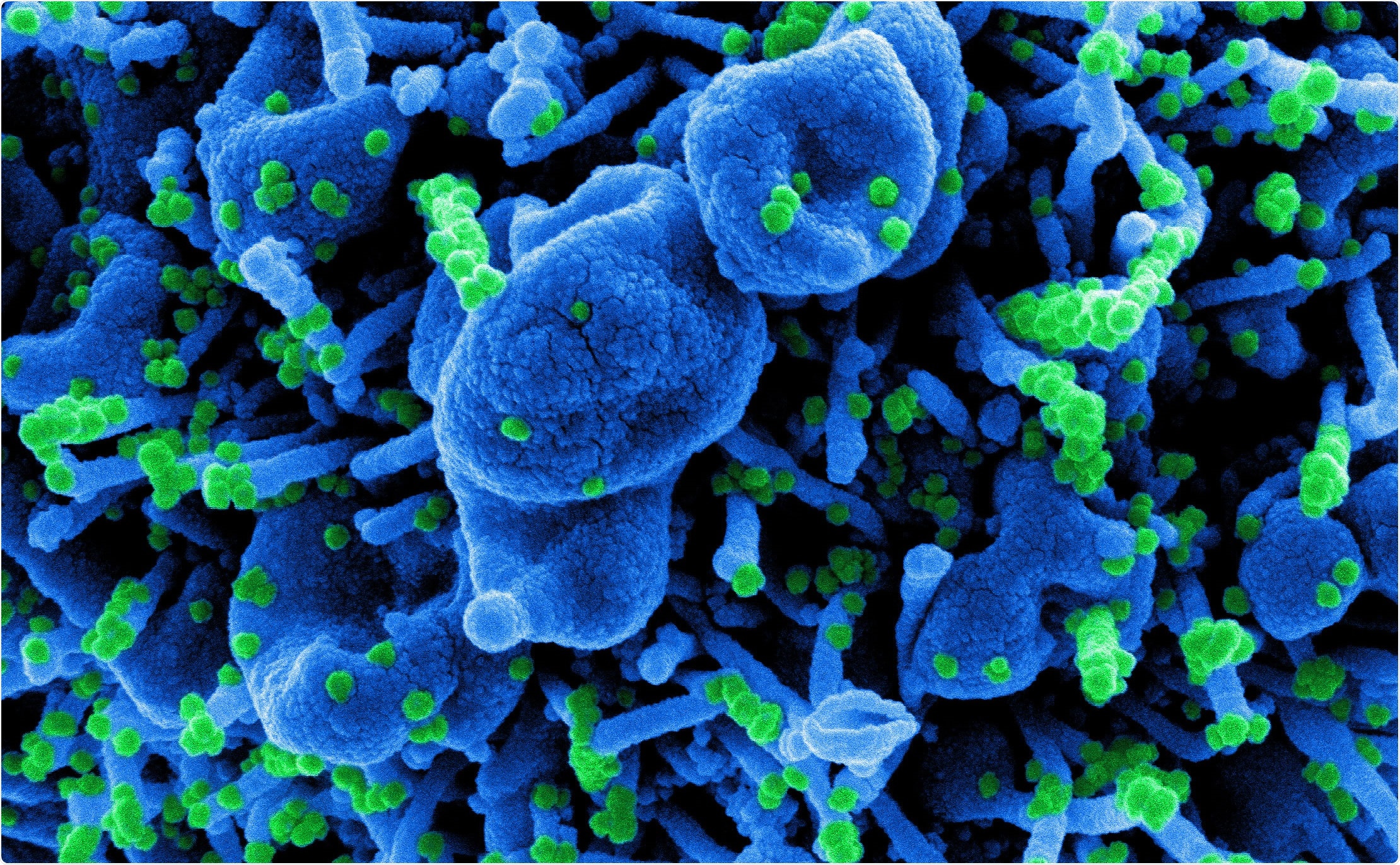 The E484K mutationThe new mutation is worrying since it could impact vaccine efficacy. The E484K mutation, which occurs on the virus's spike protein, is the same change reported in the variants found in South Africa and Brazil. The mutation has been seen in the coronavirus variant B.1.351, which was first identified in South Africa in October 2020. Previous reports showed that COVID-19 vaccines and antibody therapy have been less effective against the South African strain. For instance, a new study showed that the E484K mutation might require more antibodies to prevent the lab-grown virus from infecting cells. Further, a vaccine candidate, Novavax, announced that the vaccine was 89 percent effective in its Phase 3 human trial in the U.K. However, it only appeared 60 percent effective in a Phase 2b trial in South Africa. In Johnson & Johnson's Phase 3 trial, the effectiveness of the vaccine varied by country. The United States has an efficacy level of 72 percent, compared with 57 percent in South Africa. In both trials, about 90 to 95 percent of South African cases were tied to the B.1.351 variant, which contains the E484K mutation. Now, the E484K mutation has been detected in B.1.1.7 VOC 202012/01, the fast-spreading variant of SARS-CoV-2 that caused skyrocketing cases across the globe. Also known as the U.K. "Kent" variant with the E484K mutation, it has been observed in 11 out of 214,159 samples tested by scientists working with PHE. The cases were predominantly from the South West of England. Scientists fear that the variant may have already spread and there may be more cases that have not yet been found. It also appears that some of the samples acquired the mutation independently, instead of spreading from a single case. Preliminary information suggests more than one acquisition event, hinting that the new mutation may have already spread in the country. Scientists worry that the new mutation could impact the efficacy of COVID-19 vaccines, which have been rolled out in many countries. What can be done?The health sector in the U.K. works to increase testing of suspected cases to determine the extent of the virus spread. This way, positive cases can be isolated immediately to prevent the virus from spreading. Health experts believe that aggressive testing, compliance with infection control measures, and the rapid roll-out of vaccines are crucial to containing the virus's spread. At the same time, these can combat the spread of novel variants. The E484K mutation may increase the virus's ability to escape neutralization by antibodies. This means that current vaccines may not work as well, affecting the efficacy rates of these vaccines. Further studies are needed to determine how these mutations occur and if they would impact the vaccines being administered. |
| You are subscribed to email updates from "sars,sars cause,sars disease" - Google News. To stop receiving these emails, you may unsubscribe now. | Email delivery powered by Google |
| Google, 1600 Amphitheatre Parkway, Mountain View, CA 94043, United States | |


Comments
Post a Comment